
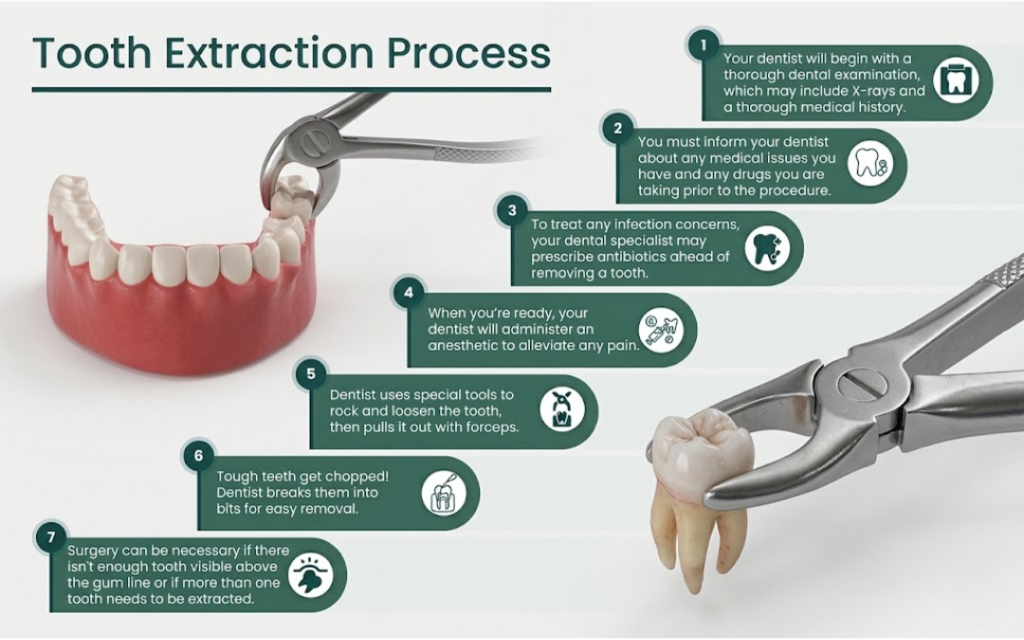
If your dentist has recommended a tooth extraction, it’s normal to feel a little nervous. But knowing what to expect can ease your mind and help you prepare. Whether it’s a simple removal of a loose baby tooth or a more involved surgical extraction of an impacted wisdom tooth, the tooth extraction procedure is one of the most common and well-practiced treatments in dentistry. Millions of people undergo this safe, routine process every year, often with minimal discomfort. In this guide, we’ll walk you through everything: what happens before, during, and after the extraction, how long it takes, what to eat, how to manage pain and swelling, and how to support a smooth recovery. With the right care, you’ll be back to smiling comfortably in just a few days.
Dentists always try to save a natural tooth whenever possible. But sometimes, extraction is the best or only option. Common reasons include:
Your dentist will only recommend extraction after considering all alternatives.
The actual extraction process varies depending on whether the tooth is visible and intact (simple extraction) or broken, buried, or impacted (surgical extraction). Here’s a thorough, step-by-step breakdown of both types.
This is typically performed by a general dentist and takes place in a single visit under local anesthesia.
Step 1: Numbing the Area With Local Anesthesia
Your dentist will first clean the area and apply a topical numbing gel to reduce the sting of the injection. Then, they’ll inject a local anesthetic (like lidocaine) near the tooth root. You may feel a brief pinch or burning sensation, but this lasts only a few seconds. Full numbness usually sets in within 5 to 10 minutes. Your lip, tongue, or cheek on that side may feel tingly or heavy. That’s normal.
Step 2: Loosening the Tooth (Luxation)
Using a tool called an elevator, the dentist gently rocks the tooth back and forth to widen the socket and separate the tooth from the ligament holding it in place. This step may create pressure or a dull sensation, but not pain. You might hear popping or cracking sounds; these are normal and not a sign of damage.
Step 3: Removing the Tooth From the Socket
Once the tooth is sufficiently loose, the dentist uses dental forceps to grip the crown and carefully lift it out in one smooth motion. In some cases, the tooth may come out in pieces if it’s fragile or decayed but this is still considered a simple extraction.
Step 4: Cleaning the Socket and Controlling Bleeding
After removal, the dentist clears any debris from the socket and may rinse it with sterile saline. They’ll then place a folded gauze pad over the site and ask you to bite down firmly for 30 to 45 minutes to encourage blood clot formation.
Step 5: Final Check and Aftercare Instructions
Before you leave, the dentist will check for excessive bleeding and give you printed aftercare instructions. No stitches are needed in most simple extractions.
Total time: 10 to 20 minutes.
This is often performed by an oral surgeon or experienced dentist and may involve sedation in addition to local anesthesia.
Step 1: Anesthesia and Sedation Options
You’ll receive local anesthesia to numb the area. Depending on your anxiety level or the complexity of the case, you may also get:
You won’t feel pain during the procedure, though you may be aware of movement or pressure.
Step 2: Making a Gum Incision
The surgeon makes a small cut in the gum tissue to expose the tooth and surrounding bone. If the tooth is fully impacted (trapped under the gum), this step is essential for access.
Step 3: Removing Bone or Sectioning the Tooth
If bone blocks the tooth, a small amount may be removed using a dental drill. For large or curved-rooted teeth (like wisdom teeth), the surgeon often divides the tooth into smaller pieces using a high-speed bur. This minimizes trauma and makes removal easier.
Step 4: Extracting the Tooth Safely
Each piece is carefully lifted out using forceps and elevators. The surgeon ensures no fragments remain in the socket.
Step 5: Cleaning the Area and Placing Stitches
The socket is irrigated with sterile saline to remove bone chips or bacteria. Then, the gum flap is repositioned and stitched closed with dissolvable sutures (which typically disappear in 5 to 10 days). Gauze is placed over the site to control bleeding.
Step 6: Post-Operative Monitoring and Discharge
If you receive sedation, you’ll rest in a recovery chair for 15 to 30 minutes until you’re alert enough to go home. A companion must drive you.
Total time: 20 to 45 minutes, depending on tooth position and number of teeth removed.
The first 24 to 72 hours are critical for proper healing. Here’s what to expect:
Most people feel significantly better within 3 to 5 days, though full gum healing takes several weeks.
Understanding the tooth extraction recovery timeline helps you know what to expect during healing. Here’s a day-by-day guide to normal recovery after your procedure.
Timeframe | What to Expect |
First 24 hours | Blood clot forms; avoid rinsing, spitting, or sucking (no straws!) to protect the clot |
Days 2–3 | Swelling peaks then begins to go down; pain should lessen with medication and rest |
Days 4–7 | Most people return to normal activities; stitches (if used) start dissolving |
Weeks 2–4 | Gums close over the site; bone continues healing underneath |
Full healing | Soft tissue heals in 3–4 weeks; bone may take 3–6 months to fully fill in |
Following tooth extraction aftercare instructions closely helps prevent complications like dry socket, a painful condition where the blood clot is lost too soon.
Choosing the right foods supports healing and prevents irritation. Stick to soft, cool, and non-spicy options for the first 3–5 days.
Good choices include:
Avoid chips, nuts, rice, popcorn, or anything with small particles that could get stuck in the socket.
Knowing what to eat after tooth extraction makes recovery smoother and more comfortable.
If pain after tooth extraction gets worse after day 2, or if you develop a foul taste, fever, or pus, contact your dentist immediately. These could signal infection or dry socket.
A tooth extraction might sound intimidating, but with modern techniques and proper care, it’s a straightforward and manageable procedure. By understanding what to expect during tooth extraction and following your aftercare plan, you can minimize discomfort and speed up healing. Most people are surprised by how quick and uneventful the process really is.
For a calm, professional, and caring experience, from consultation through recovery, trust Orosmyle Dental Clinic. Our team prioritizes your comfort, explains every step in plain language, and provides personalized aftercare to ensure your healing goes smoothly.
What should I expect during a tooth extraction?
You’ll feel pressure but no pain due to local anesthesia; the procedure usually takes 10 to 45 minutes.
How long does tooth extraction take?
Simple extractions take 10–20 minutes; surgical ones may take up to 45 minutes.
What happens after tooth extraction?
Bleeding, mild pain, and swelling are normal for the first few days, followed by gradual healing.
How long is tooth extraction recovery time?
Most people feel better in 3–5 days, though full gum healing takes 3–4 weeks.
Is pain after tooth extraction normal?
Yes, mild to moderate pain is normal for 1–3 days and can be managed with medication.
How do I reduce swelling after tooth extraction?
Use ice packs on your cheek for the first 24 hours and keep your head elevated.
What are tooth extraction aftercare instructions?
Avoid spitting, straws, and smoking; bite on gauze; rest; and rinse gently with salt water after 24 hours.
What should I eat after tooth extraction?
Stick to soft, cool foods like yogurt, mashed potatoes, and smoothies for the first few days.
Can I brush my teeth after extraction?
Yes, but avoid the extraction site for the first 24 hours; then brush gently.
When should I call the dentist after extraction?
Call if pain worsens after day 2, you have a fever, notice pus, or suspect dry socket (severe pain with bad taste).
Book your online appointment easily and at your convenience.Experience professional teeth whitening that is safe and effective.Enjoy a brighter, healthier smile with expert dental care.