How Coffee, Tea & Cold Drinks Affect Your Teeth Over Time

Millions of people begin their day with a cup of coffee, enjoy afternoon tea, or unwind with a cold soft drink. While these beverages offer comfort, energy, or refreshment, their cumulative impact on dental health is profound—and often underestimated.

Unlike trauma or sudden pain, the damage from these drinks occurs gradually, through biochemical processes that weaken enamel, discolor teeth, and create an environment ripe for decay. Understanding the science of how these drinks interact with tooth structure is the first step toward preventing irreversible harm.

Understanding Tooth Structure

Teeth are not living tissue in the way skin or bone is.Enamel, the outermost layer, is a highly mineralized, non-regenerative substance composed of 96% hydroxyapatite crystals (calcium phosphate).Once lost, enamel cannot regenerate. This makes prevention critical.

Quick Summary: How These Drinks Harm Your Teeth

Coffee, tea, and cold drinks damage your teeth by:

  • Softening enamel through acid exposure
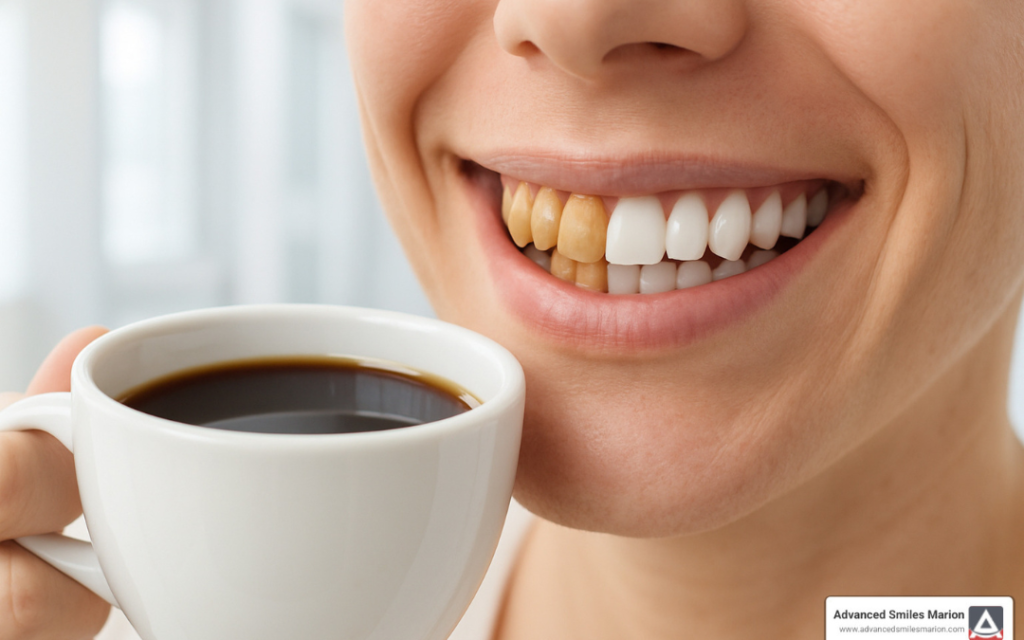
  • Causing stains from tannins and chromogens
  • Promoting decay by feeding bacteria with sugar
    Result over time:
  • Enamel erosion
  • Discoloration
  • Sensitivity
  • Cavities

How Coffee Damages Your Teeth: Stains, Acidity & Sugar Risks

The Science Behind the Damage

Coffee contains three primary agents:

  • Chromogens: Dark pigments that bind to enamel proteins
  • Tannins: Increase stain adhesion and roughness
  • Acidity (pH 4.8–5.2): Softens enamel temporarily
Long-Term Effects of Daily Coffee
  • Short term (1–3 months): Surface staining (partially removable)
  • Medium term (6–12 months): Deep intrinsic stains
  • Long term (1–3 years): Enamel thinning and sensitivity
Impact of Sugar, Syrups & Creamers

Adding sugar or sweeteners:

  • Feeds bacteria like Streptococcus mutans
  • Produces lactic acid
  • Drops pH below 5.5 (demineralization threshold)

Even honey or jaggery behaves the same.

How Tea Affects Your Teeth

Types of Tea & Their Effects
  • Black tea: Highest tannins → strong staining
  • Green tea: Less staining, mildly acidic
  • Herbal tea: Safest (low tannins, near neutral pH)
Lemon in Tea: Hidden Risk
  • Citric acid pH ≈ 2.2
  • Drops drink pH below 3
  • Causes 3–5x more enamel loss
Frequent Sipping Problem
  • Saliva needs 30–60 minutes to neutralize acid
  • Constant sipping = continuous enamel attack

How Cold Drinks Damage Your Teeth

The Sugar–Acid Cycle

Cold drinks contain:

  • Sugar: Fuels acid-producing bacteria
  • Acids (pH 2.5–3.5): Direct enamel erosion

Example:
A 330ml cola ≈ 35g sugar

Diet & Zero Drinks Are Not Safe
  • No sugar, but still highly acidic
  • Cause similar enamel erosion
Erosion vs Abrasion
  • Acid softens enamel (erosion)
  • Brushing afterward removes it (abrasion)

This combination = major enamel loss

Signs of Damage
  • Transparent tooth edges
  • Small dents (cupping)
  • Yellowing (dentin exposure)
  • Sensitivity to cold/sweets

Timeline of Damage

TimeframeCoffeeTeaCold Drinks
1–4 weeksSurface stainsMild stainsEarly demineralization
3–6 monthsDeep stainsVisible discolorationEarly erosion
1–2 yearsEnamel thinningSevere stainingStructural loss
3+ yearsPossible damageRough enamelRestorative treatment needed
Dentist-Approved Tips to Reduce Damage
  • Use a straw
  • Rinse with water after drinking
  • Wait 30–60 minutes before brushing
  • Consume drinks with meals
  • Chew xylitol gum
  • Use fluoride toothpaste
  • Get professional cleaning every 4–6 months
Advanced Dental Treatments

Dentists may use:

  • Fluoride varnish (5% NaF)
  • CPP-ACP (MI Paste)
  • Dental sealants
When to See a Dentist
  • Persistent stains
  • Long-lasting sensitivity
  • Thinning or chipping teeth
  • White chalky spots near gums
Protect Your Teeth: Smart Habits

Your daily beverage habits shape your dental future.

With proper care and awareness, you can still enjoy your favorite drinks without damaging your enamel.

FAQs

Can enamel repair itself?
Partially, through remineralization—but cavities are irreversible.

Does temperature matter?
Not much. pH and frequency matter more.

Is cold brew safer?
Less acidic, but still stains.

Does whitening toothpaste work?
Only for surface stains.

After whitening, can I drink coffee?
Avoid for 48–72 hours.

Does milk reduce acidity?
Slightly, but not enough to prevent damage.

Is sparkling water safe?
Plain is okay; flavored is risky.

How does saliva help?
Neutralizes acid and repairs enamel.

Are these drinks safe for children?
Limit intake; children are more vulnerable.

Best drink for teeth?
Water (especially fluoridated).

Online Appointment

Enhance Your Smile with Professional Whitening

Book your online appointment easily and at your convenience.Experience professional teeth whitening that is safe and effective.Enjoy a brighter, healthier smile with expert dental care.

We Encourage You to Schedule a Consultation

Opening Hours