Discovering changes in your mouth can raise immediate concerns about long term health. Understanding how DNA ploidy testing helps identify precancerous oral conditions gives patients and clinicians a powerful advantage in early intervention. Unlike traditional visual exams that rely on surface appearance, this advanced method measures genetic stability inside your cells to spot high risk changes before they become visible or painful. By combining routine dental evaluations with molecular screening, you gain a clearer picture of your oral cancer risk assessment. This guide explains the testing process, compares it to conventional biopsy methods, and outlines who benefits most from this proactive approach to oral lesion evaluation.
How does DNA ploidy testing identify precancerous conditions? It measures cellular DNA content to detect chromosomal instability before visible changes occur. Healthy cells show balanced DNA, while abnormal or precancerous cells display irregular patterns. This objective analysis flags high risk oral lesions early, guiding timely monitoring or targeted intervention.
How does DNA ploidy testing identify precancerous conditions? It measures cellular DNA content to detect chromosomal instability before visible changes occur. Healthy cells show balanced DNA, while abnormal or precancerous cells display irregular patterns. This objective analysis flags high risk oral lesions early, guiding timely monitoring or targeted intervention.
Your cells normally contain a balanced, paired set of chromosomes. This healthy state is called diploid. When cells begin to transform into precancerous or cancerous tissue, they experience genetic instability that disrupts this balance. The resulting irregular DNA content is known as aneuploidy.
DNA aneuploidy serves as an early biological warning. It frequently appears in oral tissue long before traditional clinical symptoms like pain, bleeding, or visible lumps develop. By measuring the exact DNA concentration within collected cells, dental professionals can identify abnormal oral tissue detection markers that visual exams often miss. This molecular insight transforms how clinicians approach oral dysplasia diagnosis and long term patient monitoring.
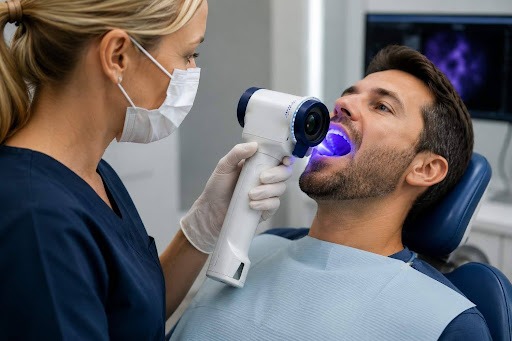
The testing workflow is designed to be efficient, minimally invasive, and highly precise. Understanding each step helps patients feel prepared and confident before scheduling their appointment.
To help you understand why clinicians increasingly rely on molecular screening alongside conventional exams, the following table compares DNA ploidy analysis with standard visual assessment and tissue biopsy. This breakdown clarifies how DNA analysis for oral lesions improves diagnostic precision and guides treatment planning.
Evaluation Method | Detection Focus | Subjectivity Level | Sample Requirement | Primary Clinical Use |
Traditional Visual Exam | Surface color, texture, and ulceration | High; depends on clinician experience | None; observational only | Routine screening and initial symptom documentation |
Standard Tissue Biopsy | Cellular architecture and invasion depth | Moderate; relies on pathologist interpretation | Surgical tissue removal from targeted area | Definitive cancer diagnosis and treatment staging |
DNA Ploidy Testing | Chromosomal stability and genetic abnormalities | Low; automated mathematical measurement | Gentle brush cell collection | Early oral cancer detection and risk stratification |
Conventional oral pathology screening faces several diagnostic hurdles that can delay accurate risk assessment. DNA ploidy testing directly addresses these challenges by providing quantifiable, objective data.
To help you evaluate how molecular screening improves clinical decision making, the following table outlines common diagnostic limitations and how DNA ploidy testing resolves them. This reference demonstrates why advanced oral cancer screening technology is becoming a standard component of comprehensive oral health care.
Diagnostic Challenge | How DNA Ploidy Resolves It |
Inter observer variability | Automated cytometry eliminates visual bias by delivering consistent, mathematical measurement of genetic mutations across different patients and clinics |
Under grading dysplasia | Detects severe chromosomal damage in lesions that appear benign or low grade under traditional microscopic evaluation |
Biopsy selection uncertainty | Maps the highest risk areas within widespread lesions, allowing surgeons to target the most clinically relevant tissue for surgical excision |
Delayed intervention | Identifies high risk molecular changes months or years before visible progression, enabling proactive monitoring and less invasive management |
Clinical studies confirm that combining traditional dysplasia grading with a DNA ploidy profile yields the highest predictive accuracy for malignant transformation. This integrated approach allows oral health specialists to design personalized surveillance pathways rather than relying on reactive treatment protocols.
This advanced screening is particularly valuable for individuals with known risk factors or persistent oral changes. Understanding when DNA ploidy testing is recommended helps patients and caregivers schedule timely evaluations.
You may benefit from DNA ploidy testing if you:
Understanding your DNA ploidy report empowers you to participate actively in your care plan. Results are typically categorized into three risk tiers:
Aneuploid results do not confirm cancer. They serve as an advanced early detection tool that triggers more precise diagnostic steps. When combined with clinical examination findings, DNA ploidy data creates a comprehensive oral precancer screening strategy that prioritizes patient safety and treatment efficiency.
For patients seeking comprehensive, technology driven preventive care, Orosmyle Dental Clinic delivers evidence based oral precancer screening with a focus on accuracy and patient comfort. The practice integrates DNA ploidy testing with advanced visual assessment and clinical risk evaluation to provide a complete picture of your oral health.
Experienced clinicians at the Panvel location follow strict collection protocols and partner with certified diagnostic laboratories to ensure reliable, timely results. When abnormalities are identified, the care team coordinates seamless follow up pathways, including specialized biopsy referral and personalized monitoring schedules. Whether you are exploring oral cancer screening in Panvel for routine prevention or managing a known oral lesion, Orosmyle Dental Clinic combines clinical expertise with compassionate, patient centered guidance.
Protecting your mouth from progressive disease means embracing screening methods that look beyond surface symptoms. DNA ploidy testing delivers objective, early warning data that empowers clinicians and patients to act before minor changes become serious conditions. When paired with regular dental evaluations and healthy lifestyle choices, this advanced screening becomes a cornerstone of long term oral wellness.
If you are ready to explore oral precancer screening or have questions about whether DNA analysis is right for your specific situation, Orosmyle Dental Clinic welcomes you for a personalized consultation. From gentle sample collection to clear result interpretation and coordinated follow up care, the clinical team is dedicated to safeguarding your health with precision and compassion. Contact the clinic today to schedule your screening and invest in a proactive approach to oral wellness.
What is DNA ploidy testing in dentistry?
DNA ploidy testing is an advanced diagnostic method that analyzes the DNA content of oral cells to detect abnormal cellular changes that may indicate precancerous or cancerous conditions.
How does DNA ploidy testing help detect precancerous oral conditions?
The test identifies abnormal DNA patterns in oral tissues, which can signal early cellular changes linked to oral dysplasia and increased oral cancer risk before visible symptoms become severe.
Which oral conditions may require DNA ploidy testing?
DNA ploidy testing may be recommended for suspicious oral lesions, leukoplakia, erythroplakia, non-healing mouth ulcers, and other abnormal tissue changes that could become cancerous.
Is DNA ploidy testing used for oral cancer screening?
Yes, DNA ploidy testing is often used as part of advanced oral cancer screening to help identify abnormal cells and assess the risk of malignant transformation.
Can DNA ploidy testing replace a biopsy?
DNA ploidy testing does not completely replace a biopsy, but it can help determine which lesions may need further investigation or monitoring through biopsy and clinical evaluation.
Is DNA ploidy testing painful?
No, the procedure is generally non-invasive and painless. It usually involves collecting cells from the mouth using a gentle brushing or tissue sample technique.
Who should consider DNA ploidy testing?
People with tobacco or alcohol use habits, persistent oral lesions, a history of oral dysplasia, or symptoms such as white or red patches in the mouth may benefit from DNA ploidy testing.
How accurate is DNA ploidy testing for detecting abnormal oral cells?
DNA ploidy testing can improve early detection of abnormal oral cells when combined with clinical examination and other diagnostic methods, helping dentists identify high-risk lesions more effectively.
What happens if DNA ploidy testing shows abnormal results?
If abnormal DNA changes are detected, the dentist may recommend additional testing, biopsy, close monitoring, or early treatment to prevent progression toward oral cancer.
Why is early detection of precancerous oral conditions important?
Early detection allows timely treatment of abnormal oral tissues before they develop into oral cancer, improving treatment outcomes and reducing the risk of serious complications.
Book your online appointment easily and at your convenience.Experience professional teeth whitening that is safe and effective.Enjoy a brighter, healthier smile with expert dental care.